
“Place” of Arbitration is not always “Seat” of Arbitration says Indian Supreme Court.
- Team VS ROBIN
- Dec 1, 2018
- 5 min read
Updated: Apr 12, 2022
‘Venue’, ‘Place’ and ‘Seat’ - three words which are synonyms to each other in common parlance. But, these words are occupying judicial time in England and India like never before. Strange as it may sound, in international commercial arbitration, the word ‘venue’ does not mean the same as ‘place’ and ‘seat’. While ‘place’ and ‘seat’ are used interchangeably, ‘venue’ has an entirely different meaning.
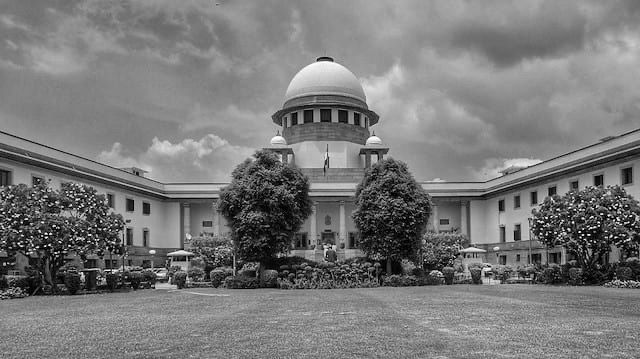
Three-Judge Bench of the Supreme Court of India vide a judgement dated 25 September 2018[1] ventured to identify the ‘seat’ of an arbitration arose out of an arbitration agreement which did not specifically provide for the place/seat of arbitration. The arbitration agreement involved in the dispute provided that the “Arbitration proceedings shall be conducted in accordance with the UNICITRAL Model Law on International Commercial Arbitration of 1985” and that the “The venue of conciliation or arbitration proceedings pursuant to this Article unless the parties otherwise agree, shall be Kuala Lumpur[2]”
Earlier, a two-Judge Bench of the Supreme Court referred[3] the matter to the three-judge Bench with the observation that having regard to the law laid down by the Supreme Court in several decisions by the Benches of variable strength, and further taking into consideration the submissions made by the parties with regard to efficacy of the judgement of three-judge Bench in Sumitomo Heavy Industries Ltd. v. ONGC Ltd. and Others[4] (“Sumitomo”).
Even though the senior counsel appearing for the parties[5] conceded that that no reference was called for and there is no justification to answer the reference, the three-Judge Bench decided to answer the reference and to deal with the case on its own merits.
The court first dealt with the issue of efficacy of judgement of three-judge Bench in Sumitomo in view of the judgment in Bharat Aluminium Company vs. Kaiser Aluminium Technical Services INC[6](“BALCO”) and other subsequent judgements of the Supreme Court. In order to answer this issue, the court analysed what has been stated in Sumitomo and how later decisions under Arbitration and Conciliation Act, 1996 (“Act of 1996”) dealt with Sumitomo judgment.
The court analysed the observations in BALCO that it well established that the law governing arbitration is linked to the place of arbitration, and that the Act of 1996 maintains the territorial link between the place of arbitration and its law of arbitration[7]. The court also relied on several other judgements which followed BALCO and held that Part I of the Act of 1996 will be excluded by necessary implication if either the juridical seat of the arbitration is outside India or the law governing the arbitration agreement is a law other than Indian law.
In order to cull out the principle laid down in Sumitomo the court relied on the judgment in Bharat Aluminium Company vs. Kaiser Aluminium Technical Services INC[8](“BALCO II”) where the court had held that “In Sumitomo, there was no specific choice on the law of arbitration agreement and this Court held that in absence of such choice, the law of arbitration agreement would be determined by the substantive law of the contract.[9]”
However, the court concluded that the principles laid down in Sumitomo is in no way applicable to the concept of determination of jurisdiction under the Act of 1996 as has been dealt with in BALCO because in Sumitomo the controversy was pertaining to the Arbitration Act of 1940 and foreign award under the Foreign Awards (Recognition and Enforcement) Act, 1961[10]. The Court held that to determine the jurisdiction of the court (seat of arbitration) the arbitration clause has to be read in a holistic manner and that if there is mention of venue and something else is appended thereto, depending on the nature of the prescription, the Court can come to a conclusion that there is implied exclusion of Part I of the Act[11].
Following this, the Court considered merit of the dispute between the parties and noted that Article 20 of the UNICITRAL Model Law on International Commercial Arbitration of 1985, which is similar to Section 20 of the Act of 1996, provides that if the arbitration agreement does not provide for seat/place of arbitration, the arbitration tribunal shall determine the seat/place of such arbitration.
In the arbitration which finally culminated into the present judgement, the tribunal had not passed any order or award on determination of the seat of arbitration. However, the Delhi High Court finding that the award was signed in Kuala Lumpur held that Kuala Lumpur, not India is the seat of arbitration.
However, the Supreme Court held that when the law of arbitration proceedings, in the present case UNCITRAL Model Law, provides that the tribunal has to ‘determine’ the seat of arbitration there should be a positive act to be done to be determine the seat of arbitration[12]. Since there was no such positive act done by the arbitrators in the present case there was no determination of seat of arbitration by the arbitrators[13].
Thereafter, the court proceeded to discuss the venue mentioned in the arbitration agreement is the place/seat of arbitration. The court held that:
“Thus, the word “place” cannot be used as seat. To elaborate, a venue can become a seat if something else is added to it as a concomitant. But a place unlike seat, at least as is seen in the contract, can become a seat if one of the conditions precedent is satisfied. It does not ipso facto assume the status of seat. Thus understood, Kuala Lumpur is not the seat or place of arbitration and the interchangeable use will not apply in stricto sensu.” (emphasis supplied)
It is to be noted that it is now well settled, and the court too in paragraph 33 of the present judgement observed, that the terms “place” and “seat” are used interchangeably. Moreover, the UNCITRAL Model Law and the Act of 1996 use the word “place” for “seat’ of arbitration.
The court contradicts this well settled principle and its own observation that the words “place” and “seat” are used interchangeably to hold that interchangeable use of the words “place” and “seat” will not apply in its strict sense.
However, it may also be argued that the term “place” used by the court in the above quoted paragraph was with regard to Article 20(3) of the UNCITRAL Model Law, as adopted in Section 20 (3) of Act of 1996, which provides that the “arbitral tribunal may, unless otherwise agreed by the parties, meet at any place it considers appropriate for consultation among its members[], for hearing witnesses, experts or the parties […]”.
However, this dictum laid down by the Supreme Court, unless clarified, will create more confusion and unsettle the concepts with regard to the words “venue”, “place” and “seat” of arbitration.
[1] https://www.sci.gov.in/supremecourt/2016/34525/34525_2016_Judgement_25-Sep-2018.pdf [2] See para 26 at page 24 of the judgment dated 25 September 2018. [3] (2018) 7 SCC 374 [4] (1998) 1 SCC 305 [5] Mr. Tushar Mehta, learned Additional Solicitor General appearing for the appellant-Union of India and Dr. Abhishek Manu Singhvi, senior counsel appearing for the respondent-Hardy Exploration and Production (India) Inc [6] (2012) 9 SCC 552 [7] See paragraph 15 of the judgment dated 25 September 2018. [8] (2016) 4 SCC 126 [9] See paragraph 22 of the judgment dated 25 September 2018. [10] Ibid paragraphs 8 and 23 [11] Ibid paragraph 23 [12] Ibid paragraphs 31 [13] Ibid paragraph 33


Comments